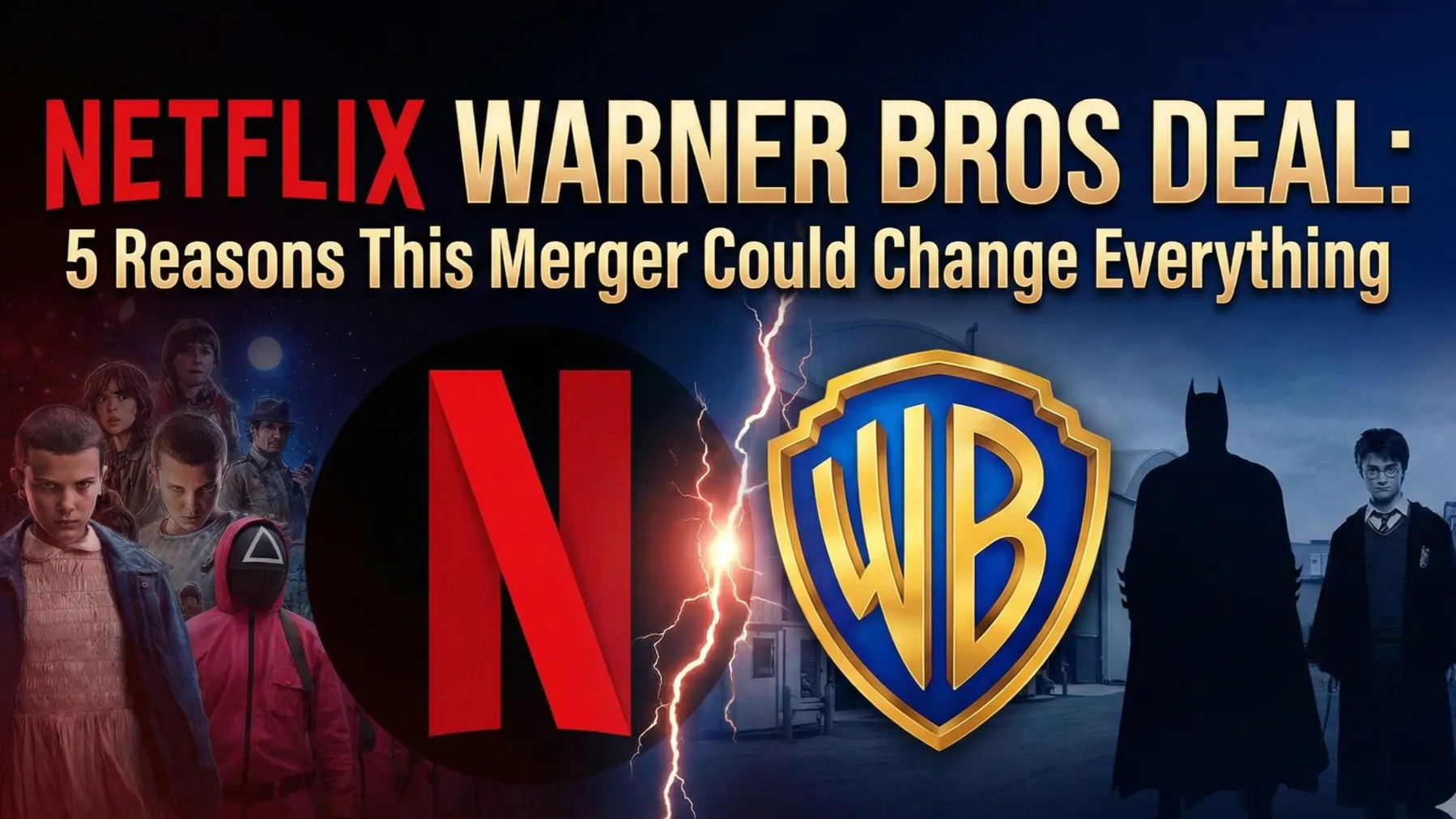
Netflix Warner Bros deal represents a historic shift in media consolidation, effectively combining the world’s largest streaming subscriber base with one of Hollywood’s most prestigious content libraries. This merger aims to solve Netflix’s intellectual property deficit while stabilizing Warner Bros. Discovery’s debt load, creating a singular entity capable of dominating both the box office and home streaming markets.
This isn’t just another corporate handshake or a simple licensing agreement to share a few sitcoms. This is a fundamental reshaping of the media landscape that combines the algorithmic power of Silicon Valley with the century-old prestige of a Hollywood titan.
As the dust settles on the announcement, millions of us are looking at our TV screens and asking the same question: Is this the golden age of streaming, or the beginning of a monopoly?
Let’s dive deep into what this means for your wallet, your favorite shows, and the future of movies.
Overview: What You Need to Know
- The merger combines the world’s largest streaming subscriber base with Hollywood’s deepest IP library.
- New “Super-Bundle” pricing tiers are expected to roll out by mid-2026.
- The deal likely signals a major shift in how Netflix approaches theatrical releases for blockbusters.
- Competitors like Disney and Amazon are now under immense pressure to acquire smaller studios.
- Creative control remains a concern as tech algorithms meet traditional filmmaking.
Also Read: SpaceX IPO Valuation 2026: 5 Bullish Signals Investors Can’t Ignore
1. The Ultimate Content Library: A Streaming Monopoly?
For Netflix, this solves a problem that has plagued them for a decade: the lack of legacy intellectual property.
They have spent billions building franchises from scratch, but they never had a Batman, a Harry Potter, or a Friends catalog that they truly owned in perpetuity.
Now, they have all of it. This merger instantly cures their “IP envy” and secures their position as the default homepage for entertainment.
However, many readers may feel a twinge of anxiety about this consolidation. When one platform holds the keys to DC Comics, Looney Tunes, HBO prestige dramas, and the
Netflix originals library, the diversity of voices in the market shrinks. We are moving away from the era of “too many apps” and barreling toward an era of “one big app.”
One area worth exploring is how this affects the “long tail” of content. With such a massive library, will cult classics get buried under the algorithm’s push for the next big superhero hit?
It seems likely that discovery will become the next battleground for the platform’s engineers.
The Franchise Powerhouse: Before & After
| Category | Netflix Original Assets | Warner Bros. Assets | The New Reality |
|---|---|---|---|
| Fantasy | The Witcher, Stranger Things | Harry Potter, Lord of the Rings | Total dominance of the genre. |
| Superheroes | Umbrella Academy, Jupiter’s Legacy | DC Universe (Batman, Superman) | A viable rival to Disney’s Marvel. |
| Prestige TV | The Crown, Ozark | Succession, The Sopranos, White Lotus | Unmatched award-season potential. |
2. A New Theatrical Strategy for the Streaming Giant
Historically, Netflix and movie theaters have been like oil and water. The streamer wanted everything on your laptop immediately, while theaters demanded exclusive windows.
The Netflix Warner Bros deal changes this dynamic overnight because Warner Bros. is, at its heart, a theatrical studio.
It is hard to imagine a company owning Christopher Nolan’s back catalog or the Dune franchise without caring about the big screen experience.
Analysts suggest this merger will force Netflix to adopt a “cinema-first” strategy for its biggest budget films. We might finally see the end of $200 million movies disappearing into the content void after one weekend.
This could mean that your Netflix subscription eventually includes perks like discounted movie tickets or early access to theatrical releases.
It bridges the gap between the living room and the cinema, potentially saving theater chains that have been struggling to find consistent blockbusters.
But there is a flip side. If the algorithm decides a movie won’t drive new subscribers, will it still get a theatrical release? The tension between “box office hits” and “retention metrics” will be the defining struggle of this new entity’s leadership team.
3. The Super-Bundle Pricing Model
Let’s talk about money, because that is where the Netflix Warner Bros deal will hit home first. We all know streaming is getting more expensive.
This merger provides the perfect excuse for a price restructuring that could make the old cable bundle look cheap by comparison.
Industry experts predict the creation of a tiered ecosystem. You might have a “Basic” tier with ads and a limited library, and a “Premium Plus” tier that unlocks the HBO vault, 4K streaming, and theatrical perks. The days of the $15 all-you-can-eat buffet are likely behind us.
Many users might find themselves paying upwards of $30 or $40 a month for this combined service. While that sounds steep, the argument will be that you are cancelling Max, Discovery+, and Netflix to pay for just one service. It’s a consolidation of bills as much as it is a consolidation of content.
Is it worth it? That depends on your viewing habits. For the casual viewer, it might feel like bloat. But for the power user, this “Mega-Bundle” offers a convenience that is hard to put a price tag on.
Projected Subscription Tiers (Estimates)
| Tier Name | Est. Monthly Price | Included Features | Theatrical Perks |
|---|---|---|---|
| Stream Lite | $18.99 | Full Library (w/ Ads), 1080p | None |
| Cinema Premium | $29.99 | No Ads, 4K HDR, HBO Catalog | 10% off tickets |
| Ultimate Access | $45.00 | Family Share, Cloud Gaming, Sports | 2 Free tickets/month |
4. The Clash of Cultures: Silicon Valley vs. Hollywood
There is a subtle but significant risk hidden in the Netflix Warner Bros deal: culture shock. Netflix is a tech company that happens to make entertainment.
Warner Bros. is a 100-year-old dream factory that prizes relationships with talent above efficiency. Merging these two philosophies is not going to be smooth.
We have seen what happens when strict cost-cutting measures meet creative endeavors. Writers and directors may worry that the “Netflix way”—which often cancels shows after two seasons if they don’t hit immediate viral metrics—will infect the patient nurturing that HBO was known for.
Will the next Game of Thrones be cancelled in season two because the completion rate dropped by 5%? It’s a valid fear. If the data scientists take full control over the greenlighting process, the artistic risks that define Warner Bros.’s history could vanish.
However, there is hope. If the leadership allows the Warner Bros. creative executives to run the studio while Netflix handles the distribution technology, we could get the best of both worlds. It requires a delicate balance of ego and economics.
5. The Competitive Response
You can bet that lights are burning late at Disney and Amazon headquarters tonight. The Netflix Warner Bros deal essentially forces every other player in the market to reconsider their position.
Disney is no longer the undisputed king of IP; they now have a rival with equal weight.
This could trigger a panic-buying spree. Will Apple buy Paramount? Will Comcast try to merge Peacock with Amazon? The middle-tier streamers suddenly look very vulnerable.
We are likely entering a phase of “survival of the fattest,” where only the absolute largest companies can compete.
For consumers, this means fewer choices but perhaps stronger platforms. The fragmentation of having to subscribe to seven different services to watch seven different shows might finally be reversing. We are returning to a Big Three or Big Four model, similar to the old TV networks.
Frequently Asked Questions
Will my current Netflix subscription price increase immediately?
It is unlikely that prices will jump the very next day. Typically, these mergers take months to pass regulatory approval and integrate systems.
However, once the libraries are combined, you can almost guarantee a restructuring of the pricing tiers. Existing “grandfathered” plans usually get phased out within 12 to 18 months of such a deal closing.
Does this mean HBO Max will shut down completely?
Yes, in the long run. The goal of the Netflix Warner Bros deal is to create a singular app experience. It makes no financial sense to maintain two separate infrastructure costs.
The brand “HBO” will likely survive as a prestigious “hub” or tile inside the Netflix interface, similar to how Marvel exists inside Disney+.
Will DC movies now premiere exclusively on Netflix?
Not necessarily. As mentioned in the theatrical strategy section, Warner Bros. values box office revenue.
You will likely see DC movies hit theaters globally first, then arrive exclusively on Netflix much faster than they would have reached other streaming services previously. The “Pay-1 window” will belong entirely to Netflix.
How does the Netflix Warner Bros deal affect international subscribers?
International licensing is complicated, but eventually, this globalizes the content. In regions where Warner Bros. licensed their content to local players (like Sky in the UK), those deals will likely lapse and the content will move exclusively to Netflix, making the service even more valuable for global users.
Are they going to reboot the Harry Potter series on Netflix?
Warner Bros. Discovery was already planning a Harry Potter TV series. Under this new deal, that project becomes a flagship Netflix Original. With Netflix’s budget and global reach, the scope of that series could expand significantly, potentially leading to more spin-offs and related content.
Key Takeaways
- The merger creates the largest single library of content in streaming history.
- Pricing models will shift toward “super-bundles” that replace traditional cable costs.
- Theatrical releases for major films will continue but will feed directly into Netflix.
- Competitors will be forced to merge or sell, reducing the number of streaming apps.
- The clash between tech algorithms and creative freedom remains the biggest risk.
Did this guide help? Share your thoughts in the comments below!
Do you think a monopoly like this is good for viewers, or do you miss the days of smaller, separate services? We’d love to hear your take on whether quality or quantity will win in the end.
External Sources